
Dental Local SEO in 2026: How to Win the Google Map Pack
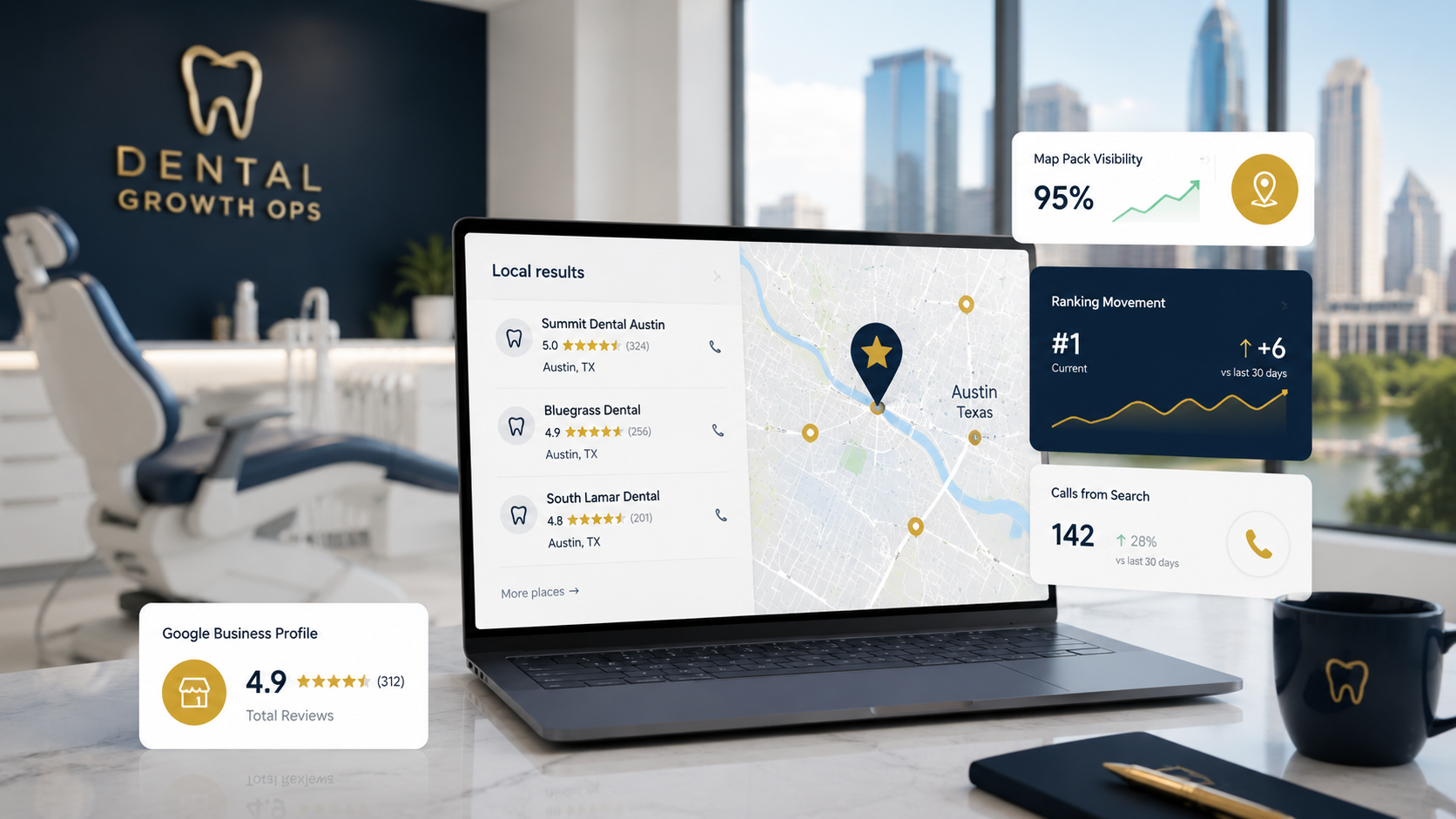
Dental local SEO in 2026 is more competitive than ever, but the practices consistently ranking in the top three map results aren't doing anything complicated. They're executing four core pillars better than the competition, compounding those efforts month over month, and never stopping.

Moaz Arshad
• 9 min read
Why the Map Pack Drives More New Patients Than Any Other Channel
According to BrightLocal's consumer research, 76% of "dentist near me" searches result in an in-person visit within 24 hours. The Google 3-Pack captures the first three organic spots on that high-intent search, and practices outside those three positions receive fewer than 5% of clicks combined. Dental local SEO is the discipline of forcing your practice into that top-three window.
Google evaluates three signals to decide which practices appear in the map pack: relevance (how well your listing matches what the patient searched), distance (proximity to the searcher), and prominence (how well-established and trusted your practice is online). Your dental SEO strategy must optimize all three simultaneously.
Pillar 1: Google Business Profile Optimization
Your Google Business Profile (GBP) is the single highest-leverage asset in dental local SEO. Most practices have incomplete, under-optimized profiles that Google treats as low-relevance signals. Here's what a fully optimized dental GBP looks like in 2026:
- Primary category: Dentist. Add every applicable secondary category: General Dentist, Dental Clinic, Cosmetic Dentist, Emergency Dental Service. Each additional category expands the keyword surface area Google associates with your listing.
- Service menu complete. List every procedure you offer. Use specific names like "Teeth Cleaning," "Dental Prophylaxis," and "Adult Preventive Care" rather than vague terms like "cleanings." Google surfaces these services in search matches.
- 25+ photos, updated monthly. Listings with 100+ photos receive 520% more phone calls than those with 10 or fewer. Prioritize exterior shots, reception, treatment rooms, and team photos.
- Weekly GBP posts. Posted content signals an active, relevant business. Tie posts to seasonal promotions, new patient offers, or treatment education.
- Q&A seeded. Add 10–15 patient-style questions with detailed answers before patients ask generic ones. This controls the Q&A narrative and adds keyword-rich content.
Pillar 2: Citation Building Across Dental Directories
Local citations, meaning mentions of your practice name, address, and phone number (NAP) across directories, are a core prominence signal. Inconsistent NAP data across directories confuses Google and suppresses rankings. Every dental practice should have consistent, complete citations across:
- Healthgrades, Zocdoc, Vitals, RateMDs, WebMD, 1-800-Dentist
- Yelp, Facebook Business, Apple Maps, Bing Places
- Chamber of commerce, local business directories
- 50+ additional general and local directories
NAP consistency is non-negotiable. A suite number spelled out in one directory and abbreviated in another creates a discrepancy Google can't confidently resolve, and your ranking suffers for it.
Pillar 3: Location and Service Pages on Your Website
The GBP alone isn't enough for competitive markets. Practices that dominate the map pack in high-competition cities back their profile up with a website architecture built for local signals. This means:
- Location pages for each city or neighborhood you serve: "Dentist in South Austin," "Dental Implants East Austin"
- Treatment pages targeting procedure + city combinations: "Invisalign in Scottsdale AZ," "Dental Veneers Tampa FL"
- LocalBusiness schema on every location page, linking back to the GBP
Your website content reinforces relevance signals. Google cross-references your GBP with your website to confirm you actually serve the area and offer the services you claim.
"Practices with 50+ monthly unique visitors from their Google Business Profile convert new patients at twice the rate of those receiving under 10 profile visits per month."
Pillar 4: Review Velocity, the Most Underrated Ranking Signal
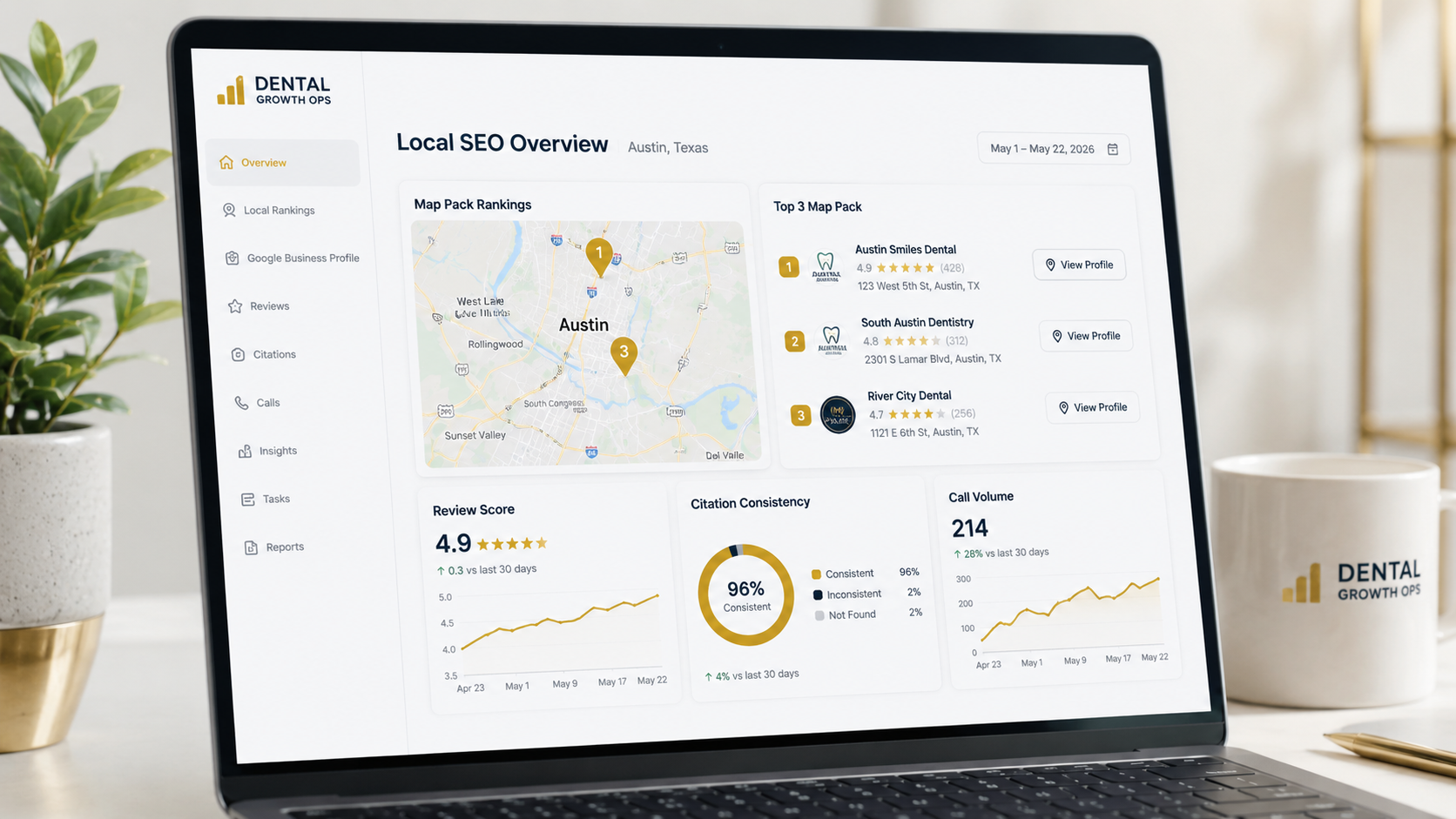
In 2026, Google weighs review velocity (the rate of new reviews) more heavily than total review count. A practice with 400 reviews and no new ones in 90 days loses map pack positions to a competitor with 80 reviews and 15 new ones this month. Recency matters. So does response rate: Google treats owner responses as a signal of business activity and professionalism.
An effective dental reputation management system automates review requests via SMS at the optimal time post-visit (typically 2–4 hours after departure), captures the feedback in-app before it reaches public platforms, and routes satisfied patients directly to Google with a one-click link. Practices using this approach consistently generate 10–25 new Google reviews per month.
Want Your Practice in the Map Pack?
Our dental local SEO service handles all four pillars (GBP optimization, citations, location pages, and review velocity) in one coordinated engagement.
Book a Free SEO AuditWhat Changed in Google's Local Algorithm in 2026
Two developments in 2026 shifted the dental local SEO landscape. First, Google's AI Overviews now appear for many high-intent local health queries, including "best dentist near me" and "dental implants in [city]." Practices with strong E-E-A-T signals (experience, expertise, authoritativeness, trustworthiness) and structured schema markup are more likely to have their information pulled into AI Overview answers.
Second, Google tightened map spam enforcement, removing thousands of fake listings and duplicate profiles. This cleaned up rankings in some markets, but it also means legitimate practices with incomplete profiles lost ground to newly cleaned-up competitors. A fully completed, consistently maintained GBP is now more important than ever.
The Compounding Nature of Dental Local SEO
Unlike paid advertising, which stops the moment you pause budget, dental local SEO compounds. A citation built today still carries authority six months from now. A review collected this week contributes to your velocity score for months. A location page ranked for "dental implants Austin TX" drives calls every day without additional spend.
The practices that win local search in 2026 are the ones that started 12 months ago and haven't stopped. If you're starting now, the right time to begin was a year ago; the second-best time is today. Pair your local SEO with a conversion-focused dental website and CRM automation to turn every new ranking position into booked appointments, not just website traffic.
Moaz Arshad
Founder of Dental Growth Ops. Dental-only marketing specialist focused on new patient acquisition, local SEO, and paid media for dental clinics in the US and Canada.
More about us →